Founder & Lead Engineer · 2025
OrchestrIQ
Engineering Intelligence for Predictable Software Delivery
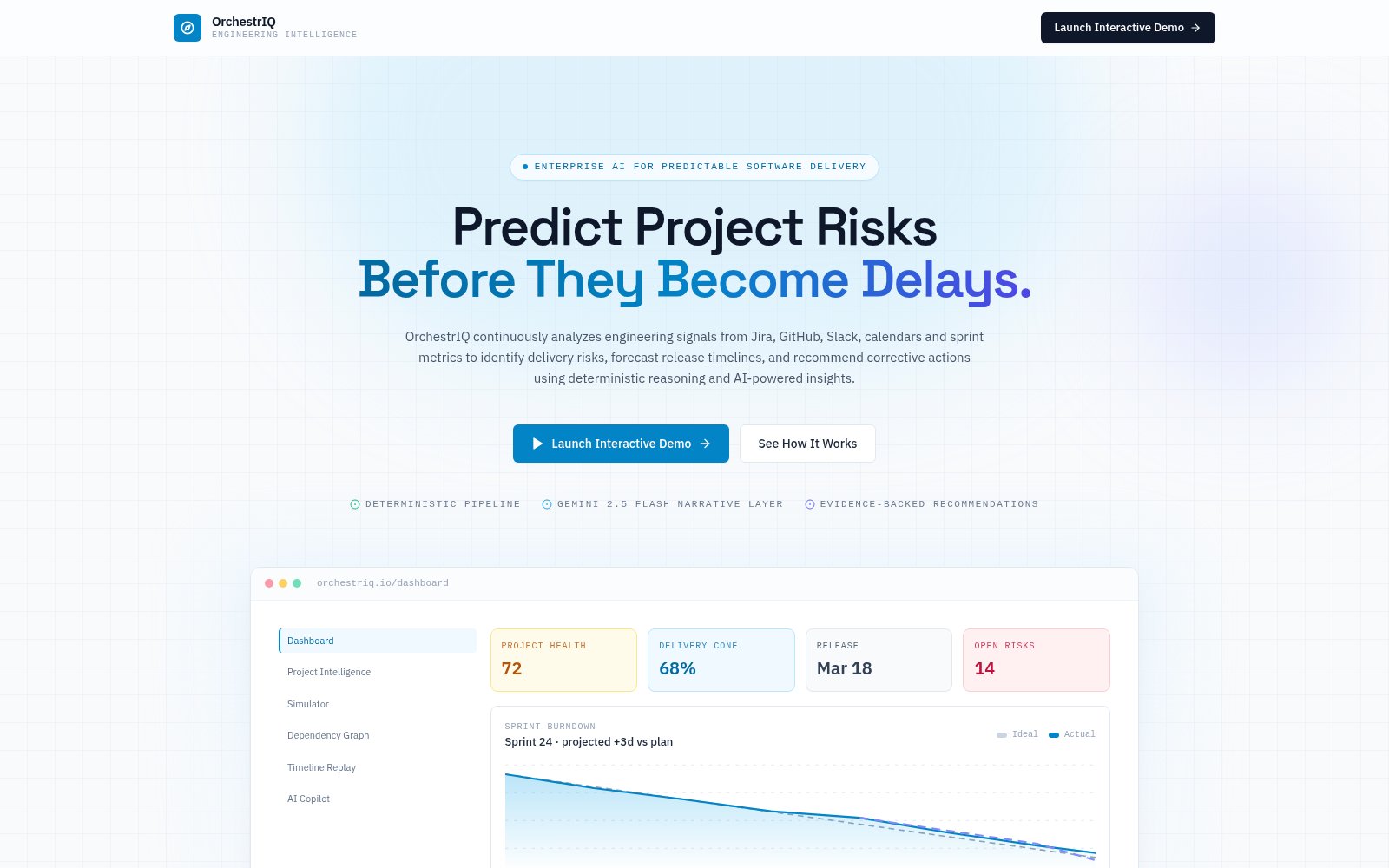
OrchestrIQ is an engineering intelligence platform for software teams and the people who lead them. It combines dependable engineering metrics with short, AI-written executive summaries, so the people doing the work and the people funding it share the same trustworthy picture of delivery health.
The business context
Engineering leaders are constantly asked a simple question they struggle to answer with confidence: will we ship on time? The data needed to answer it sits scattered across issue trackers, pull requests and CI systems. By the time risks surface in a status meeting it is usually too late to act, and planning becomes guesswork instead of evidence.
How I approached it
OrchestrIQ brings that scattered data into one place and turns it into two layers of insight. First, metrics that leaders can trust and audit. Second, a short written summary that explains what those numbers mean for delivery. The result is a single source of truth for delivery risk that engineers and executives both believe.
- 01A data layer that pulls and normalises signals from issue trackers and version control.
- 02A deterministic analytics engine that computes throughput, cycle time and clear risk indicators.
- 03An AI summary layer that is only allowed to describe numbers the system has already calculated.
- 04A fast React dashboard served from cached, read-optimised data.
Deterministic first, AI second
Every metric is calculated deterministically, so leaders can trust and audit it. The AI only narrates verified numbers, it never invents them. In an executive setting, that distinction is the difference between a tool people rely on and one they quietly stop opening.
Insight over dashboards
Instead of another wall of charts, the product leads with the answer: what is at risk, and why. Charts are there to support the thinking, not to replace it.
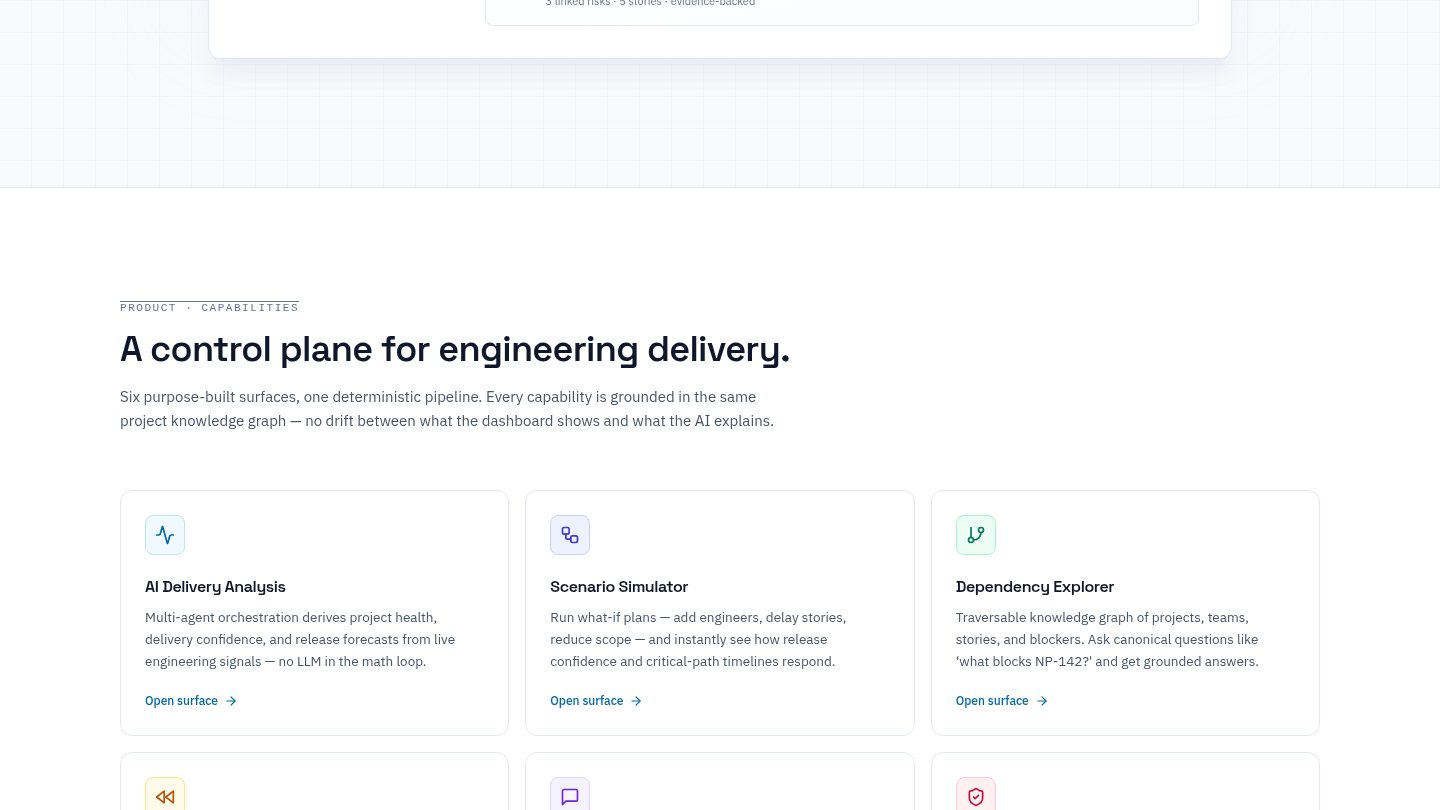
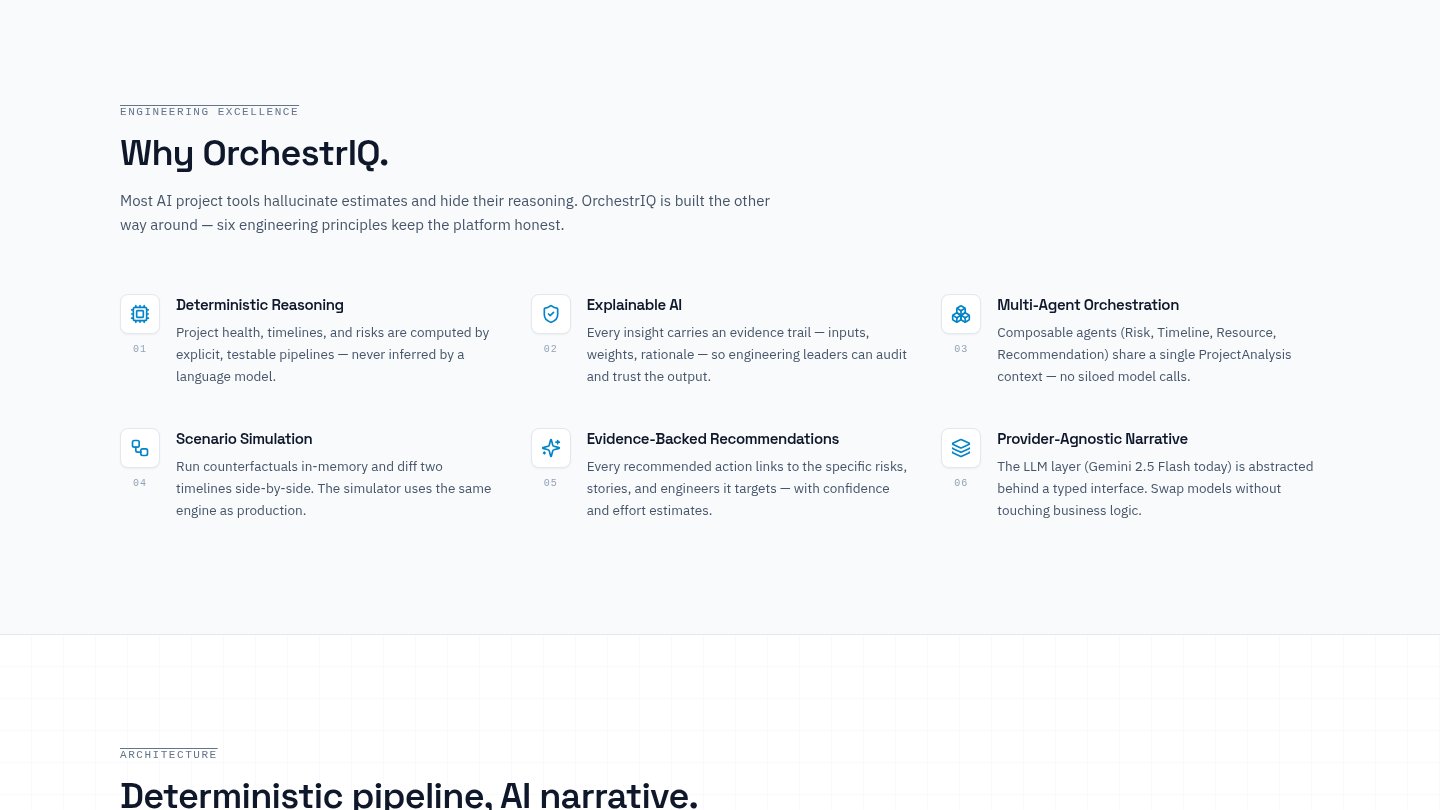
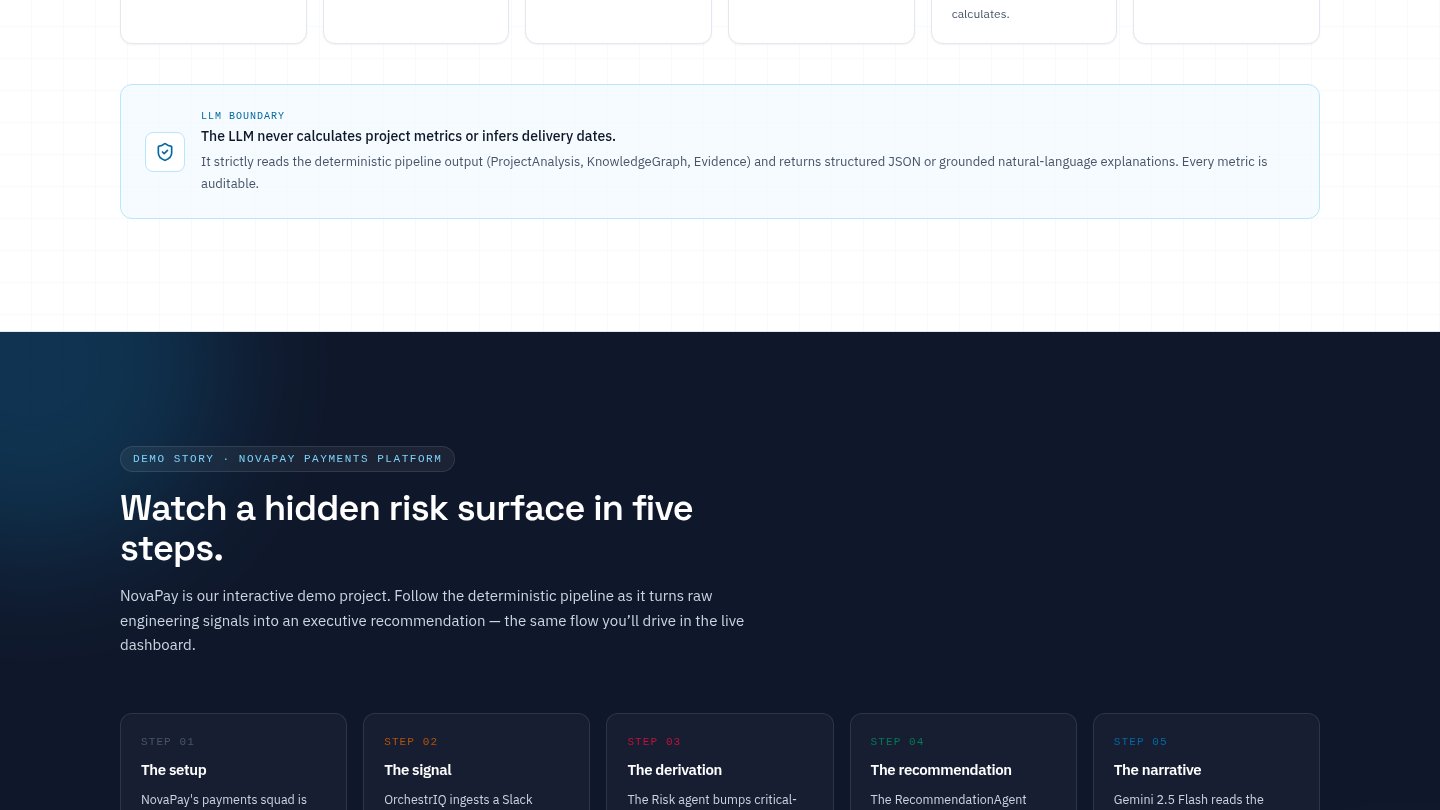
The hardest problem was trust. A single fabricated number in an executive summary would undermine the whole product. The fix was strict grounding. The model receives only structured, pre-calculated facts, and every figure shown on screen comes from the source data rather than from the model's text.
Business impact
OrchestrIQ gives teams earlier warning when delivery is slipping, and gives leadership summaries they can act on. Conversations shift from reporting what already happened to preventing problems before they land, which is where good planning actually pays off.
The most useful AI features are often the most constrained. Grounding the model in real data is what turned this from a novelty into something teams trust. Reliability is not a happy accident, it is something you design for on purpose.
Let's build
Have an idea you'd like to build?
Let's talk.